Category: Blog

  • I want my things to be scratched up with character

    I’ve got this weird thing that I’m being drawn to currently: the desire for character being reflected in the things I own and use regularly. I have a lot of things that look new — in top condition. And it’s nice having new things, but on the other hand, these things don’t have use on them. They’re all still fairly pristine.

    For example, I have a great keep cup which I’ve been using now for a couple of years. It still looks brand new. This is a good thing I guess, but I just want it to be a little more beat up. I think having something that is beat up represents an element of frugality: not giving in to the temptation of buying the next shiny thing. Instead, I want to get proper use out of what I own, and I want this approach to be reflected in these things. I want that keep cup to have a few bumps and scratches on it. The same with my water bottle: it just looks so new and clean, and it is only a few months old. But I want the scratches and dents!

    A big one is my phone. I got an iPhone 15 Pro at the end of 2023. Firstly, I have no idea why I bought the Pro version — I actively try to not use my phone these days. The camera is great, but I also don’t take heaps of photos and videos — I have a really good camera for that. The phone itself is in great condition, even after a couple of years of use. So I don’t really see why I would trade it in for the new one. Doing so would be undeniably wasteful. Instead, I want to keep it until it is all beat up. I want to run it into the ground!

    In many ways, the iPhone is almost like a subscription model — for many consumers, it’s a common practice (cultivated by Apple) to upgrade it when a new one comes out, encouraging users to pay again each year or couple of years for the new features. Of course, it’s not exactly like a subscription model, as if I choose not to, I can still use my current one. In that way, it’s like Bitwig, where I pay for the current version, which gives me updates for a couple of years. After that time though, I have to pay for another round of updates for 2 years, or just stick with my current version.

    But not buying all of these new things, and instead having a few things that you then build a strong connection and history with is, in my mind, a bit of a ‘fuck you’ to modern consumerism. It’s a way of demonstrating not giving into coercive advertisement. With this iPhone, I have paid a big bunch of cash for the silly Pro version, and I’m going to use it for as long as I can, to get the most value out of that money as I can.

    I want to look at my things, see the scratches on them, and know where they’ve been with me and why they are the way they are.
  • It’s been raining a lot

    It’s raining so much at the moment. Days and days and days of it. It’s interesting being in the thick of one of these periods of weather—it feels impossible that it could ever be sunny and warm again. It’s the same with being in the thick of a cool winter; how could it ever be hot again? It’s this sense that this is the way things currently are, and that’s how they will always be. It’s similar to times of political and social problems; how could there ever be harmony again? Of course, there will be, just as it will be sunny and warm again.

    Having said that, there’re indicators that we’re heading into a very wet spring. There may be a negative Indian Ocean Dipole (IOD) occurring, the waters around Australia warm, leading to more rain than usual. A negative IOD typically doesn’t last as long as a La Niña event, but it still means it’ll probably be rainy for much of the time until early summer. Though, I’ve been actually enjoying watching the rain come towards my apartment. Because the recent weather has been going from North-East to South-West, I’ve had this great view of it pouring over Bondi Junction, approaching via Centennial Park, and then raining right over where I live.

  • Plans & progress for Machine Hall installation

    I’m currently working on an Installation that will be presented on the 26th of September at Machine Hall in Sydney. The event is called “Elysian”. I’ve sent over the references to the visual artist I’m collaborating with for it, Kevin Nguyen.

    I’m now in the process of building a big foundation of music, which I’m going to send over to Kevin by the end of the week. It will be good to have this all as a framework to then build new material on top of. I want to play with some generative music approaches to create that material—a bunch of randomness and unpredictability on top of more stable material. Bitwig will be great for that. I’ll record long takes from a generative system built in Bitwig’s ‘The Grid’, and isolate the useable parts to work into the foundation.

    At times, I want the generative material to be the sole focus, and at other times, I want it to sit behind or embedded within the foundation layers. I want there to be a decent flow to the music, but also areas where the focus does shift between different types of material. In other words, I want there to be a kind of contrast between different sections. I want this contrast to be in the types of sounds used—presenting textural and atmospheric materials, and then more pulsatile and transient ones. Sort of like a mix between the Hypnus Records sound and Ryoji Ikeda’s approach to minimal-glitch (but no one can do it as good as Ikeda—he’s just an example of someone who nails the installation approach. It almost feels cliche to reference his work, but there’s no denying how good it is).

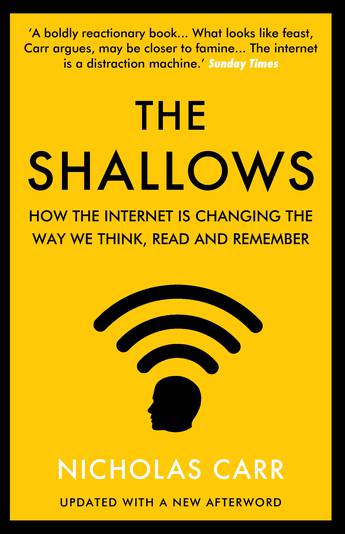
  • My thoughts on ‘The Shallows’ – Nicholas Carr

    My thoughts on ‘The Shallows’ – Nicholas Carr

    I recently finished The Shallows – Nicholas Carr. It was a really interesting exploration about how the internet is changing how we think. It was also super interesting as it was written around 2009-2010, so everything Carr was saying was based on just working on laptops, browsing the net. As I was reading, I just thought about what happened over the next 15 years; what he was observing absolutely blew up in proportion.

    He starts with McLuhan’s phrase, “the medium is the message”, and begins with a history about how “intellectual technologies” such as clocks, maps, documents and books, changed how we humans thought about things like time, geography and space, and knowledgeHe then takes a surprising route through the discovery of neuroplasticity, and sort of points to this as how the media we consume shapes our thinking. From here, he dives into how internet media, which is fragmented, and filled with hyperlinks to encourage rabbitholing, has led to more distracted and fragmented thinking. He points to this as the reason why he and so many others have found it more difficult to finish books or even long articles. By using the media on the internet, he wasn’t exercising the abilities to sit with a long, cohesive text for a long time, developing sustained focus.

    I loved the book, and found it both informative and reassuring. I’ve been interesting in the ideas about how technology shapes us (rather than the other way around), and this provided a nice historical overview of this concept. And, I simply liked the message that developing the skill of sitting with a text for a long time, focusing on its ideas, avoiding distractions and competing texts, was a very valuable and productive way to spend one’s time.

    The book definitely made me feel like reading long texts is essential for deep thinking, and sadly is also a skill that is under attack through the flood of addictive short-form content. It makes me worry quite a lot for students and their abilities to learn, if they’re spending large amounts of time scrolling socials or skimming webpages. I don’t know if I’m catastrophising, but I genuinely feel that this is a very serious issue — where young people are being brought up using social media, which obliterates their abilities to sit with a text, have cohesive thoughts and learn/think deeply. I feel like this could lead to a feeling of disconnection with the world and the self. But, I’m also seeing quite a bit of backlash at the moment against short-form garbage – young people valuing critical thinking, rejecting algorithmic recommendations, and taking control of their attention. So there’s hope!!

  • How I’m Currently Approaching Social Media

    Social media use is unhealthy. There’s no denying that it can lead to all sorts of negative impacts on mental health. There’s a seemingly endless debate I go through, about whether to use it or not. I’ve also been feeling this about the use of streaming platforms which severely underpay artists, and also encourage passive consumption of culture. It’s a shame that musicians are forced to use these platforms that cause so much damage – particularly artists starting out in their careers, trying to build an initial audience.

    I recently decided to come up with a process to approach making social media content in a way that feels sustainable for me, while avoiding the traps it sets up every time I open the app. I wanted to approach it as a true creative process, adhering to experimentation and genuine creativity.

    Here’s what I do:

    Every month or so, I head out with my camera and film short clips — around 20 seconds each. These clips are anything from hazy, blurry subjects, to clearer videos of birds and nature. They’re really just of what I find interesting and pleasing at the time.

    Then I come home and open up Da Vinci Resolve, and create about 10 timelines. I then go through the process of loading in a video and pairing it with some music. The music is typically a demo of something I’ve been working on over the past months — I keep a “demos” folder full of .mp3s of tracks I’m currently working on handy in my Finder. Sometimes I load these .mp3s into Ableton Live and further process them through transposition and reversing, or sometimes other more drastic methods. I use .mp3s because I’m not really going for the highest spec content – ultimately, these are mostly going to be played out of a phone speaker, and are already heavily compressed during the upload process.

    I then render out these 10 clips and load them into a scheduler app called Buffer (not sponsored by them or anything). This allows me to schedule these 10 posts as a batch: 2x posts a week (Mondays and Thursdays) gets me just over a month, ready for the next round.

    For the captions, I come up with a theme for the month and just blurt out short phrases of 1 – 4 words: anything that comes to mind based on the theme. Past themes, for example, have been time, distance, and holding/grasping something. I then do a little caption about the music itself, and sometimes a sentence about the visual.

    Once scheduled, if I don’t want to, I don’t have to worry about content for another month.

    From start to finish, I think the process takes me about 2.5 hours, from leaving the house to film the videos to clicking the final ‘Schedule’ button.

    But this process allows me to output a flow of content that I actually enjoy making, and avoid scrolling on the platforms themselves. It’s been working well for about 2.5 months now.

    I know people would say I should be on the platforms engaging with other users, commenting on their posts. But I just don’t enjoy being on the platforms, and to be honest I think it would be great if we moved away from these types of platforms altogether. It’s crazy that we continue to use these platforms when we know how unhealthy they are.

    Hopefully a more sustainable platform for sharing that treats its users with respect, and is centred around better values is around the corner.

  • My interview with Tim Hecker is back

    My interview with Tim Hecker is back

    I decided to re-upload my interview with Tim Hecker from last year. Unfortunately, the publication that hosted it originally, Stoney Roads, closed down recently. It was a great discussion that I felt was too good to lose!

    We discussed how he approaches his compositions, and discussed all sorts of influences and ways of thinking about music, culture and the tools that shape our work.

    You can read the full interview here, or through my Writing page.

    I had a couple of other interviews that were on Stoney Roads with Jon Hopkins, which I think would also be great to keep alive! I’ll go searching for them now.

  • Welcome to the site

    An issue I’ve had recently with online platforms is that users are often existing within the boundaries of the larger corporations that own the platforms. Instagram, for example, is a place where it feels like it could be a good space to build and showcase a portfolio of work, and build a community around it. However, the content that is uploaded to these platforms are then governed by the rules set by the owners — the algorithmic recommendations, the incentives to stay on the platform, the pairing of the content alongside ads. These platforms don’t feel like a space that can be personalised and controlled by the users whose content fill them.

    So I want this website to first and foremost be a hub for all of my creative and academic work. Housed within it will be links to all of my musical and written academic work, contact information, and a casual blog of updates and ideas. These sorts of spaces do not manipulate readers in any way by the owners of the platform.

    Browse freely, read, listen, reach out — do as you please. I’m just here to share what I’m doing, and you’re just here to hear about it (I presume!)

    The internet had — and still has — the potential to be an excellent space for virtual community building and sharing of work. Of course, nothing beats face-to-face contexts for this, but there are undeniably things that the net can offer that were not possible before it — primarily, the sharing of work to reach an audience globally. It’s just that currently the social media platforms that claim to be the beacons of these activities are based on goals that aren’t aligned with the values of community, artistic endeavor, and shared experience.

    So that is what I’m aiming to do here: host and share my work, and attempt to embrace some of the ‘healthy’ values and goals that the internet can be used to pursue.

  • A note from 07/07/2025

    Whenever I have a sense of freedom, I feel this desire to write music come through. I noticed this quite a lot last year: when I was in the thick of a busy trimester of teaching, the last thing I wanted to do was sit in the studio and work on music. It just didn’t feel important, or a valuable way to spend my time. I actually saw writing music during those times as a ‘lesser’ activity – instead focusing on reading and writing in my spare time. But when the trimester ends, all of a sudden this flood of inspiration comes, and I just want to write music all day again. I get really enthusiastic about exploring different techniques, pieces of equipment, genres, etc. And I also am excited to find new music to download and listen to. I go on big binges of one particular artist, really trying to understand their language and how their music is operating, with the aim of adapting some of the techniques for my own music.

    An artist I fell in love with late last year was Purl, who writes ambient and ambient, dubby techno – all quite long form too, which I really enjoy. I also listened to loads of Deepchord, who is in similar territory, but was a pioneer of dub techno in the 90s. The music of these artists definitely has influenced my writing processes recently, especially in how I’ve been approaching the digiboxes (the Elektron Digitakt, Digitone and Syntakt, and the Octatrack).

    This past teaching trimester, I’ve really felt interested again in the music I’ve been listening to. It’s not just ‘background noise’, or silly, unimportant work. Rather, it’s artists engaging in a creative process that is uniquely human and cultural. There’s a magic to it all: they’re engaging in an ancient practice, creating works of communication that exist beyond simple spoken languages. And this is what I’ve been really drawn to the past couple of months – that idea of communication, and how music does what it does.

    It has been bringing me back to the study of semiotic ‘sign systems’, and cultural symbols that we have decided mean something. The interesting thing is how the particular sign system of music feels to me. It feels like something beyond the human – part of nature. And it definitely is, in a way. Music is a cultural (man-made) system that is completely surrounded and dependent on the natural (sound, harmonics, acoustics, physics). The natural and the cultural here are so entirely blurred and melded together. Whereas writing describes the world in entirely cultural (man-made) ways: squiggles on a page. There is some very special type of magic going on with music that I’ve always been trying to approach and confront.

    It’s something I’ve never really been able to grasp. But that sense of it being an ‘important’ thing to be exploring – a thing worth the time exploring – changes so much, depending on what’s going on in my life. Some days, I feel like a life exploring and understanding music is a deeply valid and worthwhile way to spend a lifetime, whereas on other days, I just think it’s a waste – I think ‘there are way more important things to be focusing on during a lifetime than making patterns of sound.’

    But all of this really comes down to the idea of what the metric of success is: if building a lot of wealth is the goal, maybe music (especially in the contemporary industry) isn’t the best way to do that. But if it is to explore the nature of human culture, or to develop abilities in a fairly precise domain of knowledge and skills, music is one of the best ways to do that.

    My perspective of music has changed so much over the years, and so it’s obvious now that it will continue to change over the course of my life. There will be periods where I am enthralled by it, and there will be days where I feel like it’s been pointless and a waste. The thing is, I feel like I would probably be having these thoughts about any domain. I think everyone does. But I think that personally I’d rather be having it about this domain over most others.

  • Lessons I’ve learnt from learning about, creating and teaching music for 10 years

    I wrote this in July of 2023, when I hit a decade of being a musician. They’re rules I return to often.

    1. You cannot quantify the value of art with stream counts.
    2. Steer clear people who rob you of your enthusiasm.
    3. Create consistently, share (release) consistently.
    4. There is no one more important to a music project than the artist making it.
    5. Protect your creative time like it is time spent with your child.
    6. Choose wisely whose feedback you take onboard.
    7. Do not ever think that you know all you need to know.
    8. Your goal is not to share your best art, but to share your journey towards creating your best art1.
    9. Shamelessly identify as an artist who thinks in artistic ways.
    10. Build connections with likeminded artists, and always give AND receive help.
    11. If you were happy with a creation at the start of the day, but not so much at the end, trust that listeners will feel as you did at the start of the day.
    12. Know that what you are doing is valuable, and find ways to create even more value through other means (teaching, mentoring, giving advice, building community).

    notes:

    1. I heard this one from an interview with Chet Faker. ↩︎